Suppression doesn't just live in our decisions. It lives in our bodies, in the micro-tension we carry all day long. Every time we override what we know, we brace. The grip in our hands, the tension in our jaw, the tightness in our shoulders. These are the body's record of every moment we've silenced ourselves. Softening that grip is one of the most direct paths back to ourselves.
We've been taught to look for suppression in the big moments. The yes we should have said no to. The boundary we didn't set. The relationship we stayed in too long. We look for it in our choices, our patterns, our stories about ourselves. We miss it in our hands.
Suppression is the act of overriding our needs, feelings, and truth in order to stay safe, connected, or accepted. When suppression becomes a pattern, it turns into self-abandonment—a state of disconnection from who we really are. It lives in the micro-tension we carry all day long. Every time we override what we know, we brace. The moment we say yes and mean no, our hands grip. When we swallow our truth, our fingers curl. When we push past exhaustion, our palms tense. We've been doing this so long we don't notice it anymore.
We grip when we type. We clench when we hold our phone. We tense when we cook dinner. We brace when we drive. The tension is so small it doesn't register as significant. Our nervous system registers it completely.
What is micro-gripping and where does it come from?
I discovered this after two years of trying to address chronic upper back pain through every conventional method available. Chiropractic adjustments, cupping, physical therapy, dry needling, acupuncture, strengthening exercises, stretching, red light therapy, decompression therapy, massages. These approaches offered only temporary relief at best, even when done consistently. Deep down, I suspected there was more to the pain than the physical. I just didn't know how to address it.
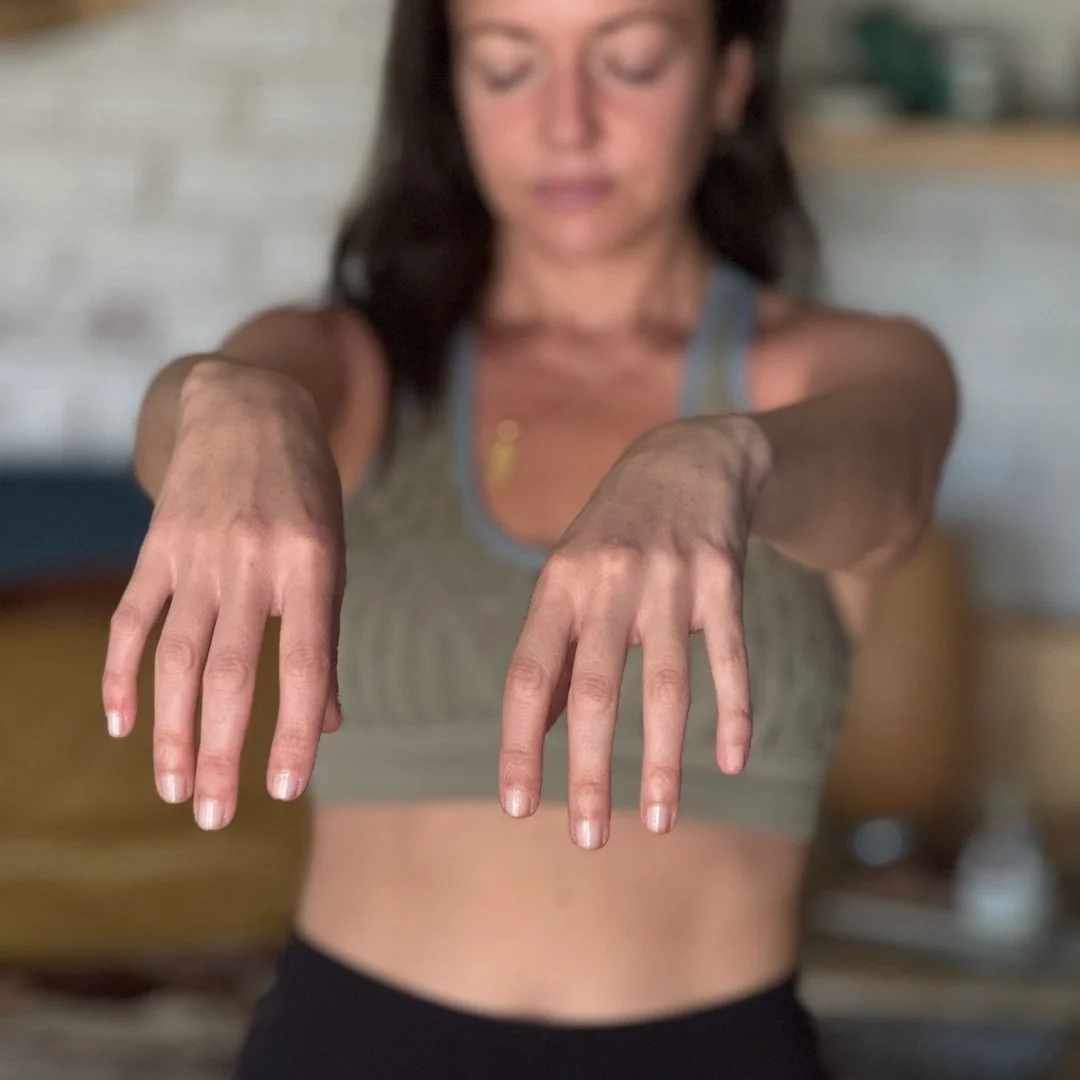
Then I came across Nervous System Movement Coach Taro Iwamoto. He teaches something called "soft hands" and explains how tension in our hands connects directly to our neck and upper back. He walked through a simple exercise demonstrating soft hands, showing how unnecessary tension in our hands keeps our nervous system in overdrive. Within 24 hours of watching, I started recognizing how I was using unnecessary tension in everyday activities like flossing my teeth, petting my dog, writing, grabbing something from a countertop, washing my hands, washing my face, peeing. Pretty much anything ending in -ing.
What does the body know about self-override?
When we abandon ourselves, our body prepares for threat. The nervous system reads the override as danger, not external danger but internal danger. We're about to betray ourselves again, and the body braces for it. The shoulders lift, the jaw clenches, the hands grip. We think the tension is just how we hold things. It's how we hold ourselves together when we're overriding ourselves from the inside.
Research on the nervous system and self-protective responses shows that the body encodes patterns of self-override in the same way it encodes external threat—through repeated activation of the stress response until bracing becomes the baseline.
Here's what makes this pattern so persistent: the more we override ourselves, the more we brace. The more we brace, the more our nervous system stays activated. The more our nervous system stays activated, the harder it is to hear what we actually know. We lose access to our own truth because our body is too busy protecting us from ourselves.
The grip becomes our baseline. We stop noticing we're doing it. We start thinking this is just how our hands work, how our body works, how we work. We adapt to the tension instead of questioning why it's there.
The practice of soft hands
Soft hands interrupts this pattern. When we soften our hands, we're telling our nervous system we don't have to brace right now. We're signaling safety. Not external safety, but internal safety. The kind that says we're not going to abandon ourselves in this moment.
The practice is simple. Start noticing your hands. Right now, as you read this, how are you holding them? Are they tense? Are your fingers curled? Is there grip where there doesn't need to be? Soften them. Let your hands relax. Let the tension go.
Then keep noticing throughout the day. When you're typing, when you're holding your phone, when you're cooking, when you're driving, when you're sitting in a meeting, when you're having a conversation you don't want to be having. Notice the grip. Every time you catch yourself tensing, ask: what am I overriding right now? Then soften your hands.
What shifted when the grip did
After three days of practicing soft hands, my upper back pain improved. I wasn't expecting that. I was just trying to interrupt the pattern of self-abandonment. The body doesn't separate the two.
The micro-tension in my hands was connected to the chronic tension in my upper back. The chronic tension in my upper back was connected to the pattern of overriding myself. When I softened my hands, I softened the grip I had on the need to stay in control. When I softened the grip, my nervous system started to believe it didn't have to stay on high alert. The physical shift followed the internal shift.
This connects to what the Release and Claim practice revealed: the body holds the pattern long after the mind has understood it. Releasing it requires working at the level where it lives, which is the body, not the narrative.
What soft hands teaches us about self-loyalty
Soft hands teaches something unexpected. Self-abandonment isn't just something we do. It's something we embody. We carry it in our jaw, our shoulders, our chest, our hands. We can talk about boundaries all day. We can journal about self-trust. We can set intentions to stop overriding ourselves. If we don't interrupt the pattern in the body, the pattern stays.
We've been living like tension is the default, like gripping our way through life is just how it has to be. Tension is what happens when we self-abandon. Softness is what happens when we come back. Soft hands is the practice of coming back, over and over, in the smallest moments, in the grip we didn't know we were holding.
Our bodies have been trying to tell us all along.
I'm still figuring out how to apply soft hands in situations where some tension is functional, like driving, at the gym, in yoga practice. Maybe that's exactly the point: to reserve the nervous system's high-alert mode for when it's truly needed.
New motto: tension is the exception, not the default.
This article is based on lived experience and is not a substitute for medical or therapeutic advice. If you're experiencing chronic pain or nervous system dysregulation, please consult a qualified healthcare provider. The soft hands technique comes from Nervous System Movement Coach Taro Iwamoto.
Frequently asked questions
What is micro-gripping? Micro-gripping is the unnecessary tension we hold in our hands and body during everyday activities. It's the grip we use when typing, holding our phone, cooking, or driving that goes beyond what the task actually requires. For those of us with patterns of self-abandonment, micro-gripping is often the body's way of bracing for the internal tension of overriding ourselves. It's so habitual it stops registering as tension at all.
Can physical tension really be connected to emotional patterns? Yes. The nervous system doesn't distinguish between external threats and internal ones. When we repeatedly override our own needs, feelings, or truth, the body braces in the same way it would brace for an external threat. Over time that bracing becomes the baseline. Chronic tension in the hands, jaw, shoulders, and upper back is often the body's accumulated record of self-override. Addressing the physical pattern and the emotional pattern together tends to be more effective than addressing either alone.
How do I start practicing soft hands? Begin by noticing. Right now, as you read this, check your hands. Are they tense? Soften them deliberately. Then set a simple intention: notice your hands three times today during ordinary activities. When you catch the grip, soften it, and ask what you might be overriding in that moment. The practice doesn't require extra time. It layers onto what you're already doing.