

About In The Search Bar
Priscilla Zorrilla is the founder of In The Search Bar, a coaching and knowledge hub built around ending suppression and building compassionate self-loyalty. She left a 17-year corporate career in 2025 to create this work.
She teaches from inside the work of ending suppression. Not as someone who has it figured out, but as someone doing it alongside her audience.
What makes In The Search Bar different?
In The Search Bar is rooted in lived experience. It comes from walking through suppression and learning how to return to myself from the inside out.
Everything here is shaped by what I've practiced in my own life and now offer to others. You won't find clinical observations here. These are real, lived lessons. Honest inner work, grounded in deep respect for the human experience.
The four pillars of this work
Everything in In The Search Bar falls into four core areas:
Recognition: Making suppression visible. Naming the patterns you've been living but couldn't articulate. You can't interrupt what you can't see.
Embodiment: Understanding how suppression lives in your nervous system and body, not just your thoughts. The pattern holds itself in place physically. This is grounded in how the polyvagal nervous system works. Our bodies store and carry the protective responses we developed long before we had words for them.
Practice: Concrete ways to interrupt the pattern in real time and redirect yourself back to you. This is the work of returning, over and over.
Rebuilding: What self-loyalty actually looks like and how to build a new relationship with yourself that isn't based on performance. Self-trust deepens each time you choose yourself.
Each article, guide, and resource connects to one or more of these pillars. You'll cycle through them repeatedly. That's how the work deepens.
Why this work exists
I trust that you aren’t here because you want to "stop caring what others think." You’re likely here because something inside feels off. Perhaps a noticeable tension or a sense of disconnection. You may be managing yourself to keep things smooth and wondering why you feel so exhausted.
This work explores that tension without judgment and gives language to what many of us feel but can't yet name. It helps you recognize self-abandonment in action so you can interrupt the pattern and come back to yourself—again and again.
What this work helps you do
This work helps you recognize when you're suppressing yourself, understand where it lives in your body, interrupt the pattern in real time, and rebuild your relationship with yourself.
It addresses four core areas: making the invisible visible (recognition), understanding how suppression lives in your nervous system and body (embodiment), giving you practices to stop mid-override and redirect yourself (practice), and showing you what self-loyalty actually looks like (rebuilding).
Suppression is a pattern you'll meet over and over. This work gives you the tools to notice when you've drifted and the practice of coming back. Each time you return to yourself, the old pattern of suppression loosens.
Each piece in the Library is meant to help you see what's happening. Over time, that clarity becomes practice.
The practice of returning
Suppression doesn't end. It's a pattern we'll meet again and again, in different forms, at different depths, throughout our lives.
The work isn't about never suppressing yourself. It's about catching yourself sooner. Redirecting yourself with less force. Coming back to yourself with more ease.
You'll override yourself tomorrow. Maybe in an hour. That doesn't mean the work isn't working. The pattern loosening happens in the repetition of returning—not in the perfection of never leaving.
This is lifelong work. Here is what this looks like in practice:
Before a recent book signing event, I noticed a familiar feeling: guilt that people were going to come support me. I traced it back to a moment in high school when speaking my truth wasn't welcome and nobody created safety around it. I learned then to make myself smaller so I wouldn't cause discomfort. Decades later that pattern was still showing up. I named it, traced it back, identified the bridge, and chose a new internal dialog. I said to myself: I feel good that people are going to come support me.
This is the work. Small, specific, repeated.
Read more about how patterns resurface and how we return to ourselves.
A good place to start
The library is central to the work. You can start on any article. You'll return to them differently each time. Here are a couple of good ones to start with:
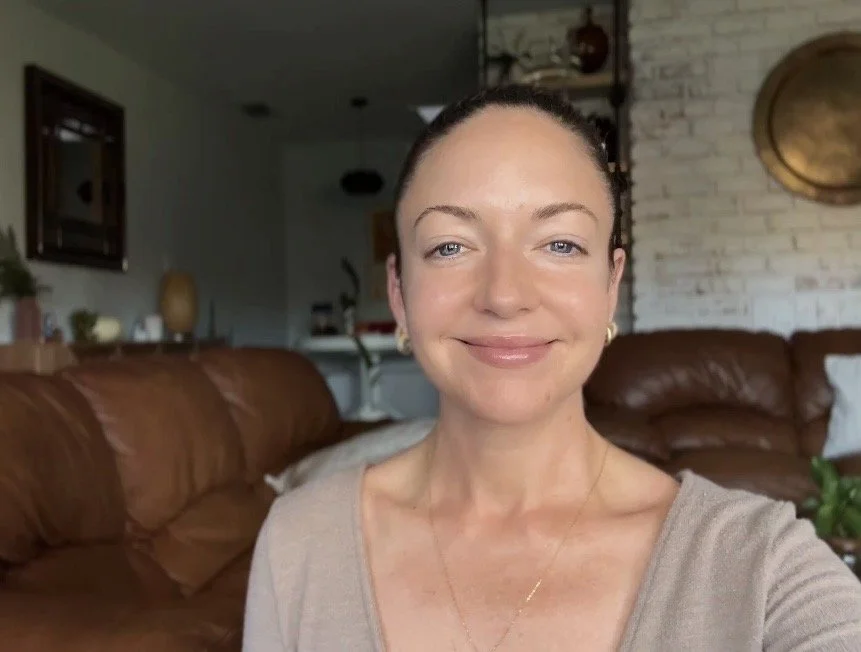
About the author
This work was created by author and coach, Priscilla Zorrilla. It's grounded in observation of lived experience and a strong desire to help people shift from suppression to compassionate self-loyalty.
After 17 years in a traditional career, she stepped out of the 9–5 without a perfectly defined plan. What followed was a deeper commitment to the inner work she had already been doing—the decade-long process that taught her how to stop overriding herself and live in her truth.
She trained in professional coaching aligned with ICF standards and became certified in holistic coaching which integrates the mental, emotional, spiritual, and physical dimensions of human experience to help clients move forward in deep alignment.
Through articles, guided resources, experiential frameworks, and private coaching, Priscilla helps people notice where they've been adapting or people-pleasing and begin choosing themselves instead.
Her vision is to change how people understand and relate to themselves by giving language to suppression and establishing compassionate self-loyalty as a recognized and sought-after way of living. This work contributes to a cultural shift where self-betrayal is no longer normalized and self-trust becomes the baseline.
Priscilla offers 1:1 holistic coaching for deep transformational work and other supportive resources. She is also a Registered Yoga Teacher (RYT® 200) with Yoga Alliance.