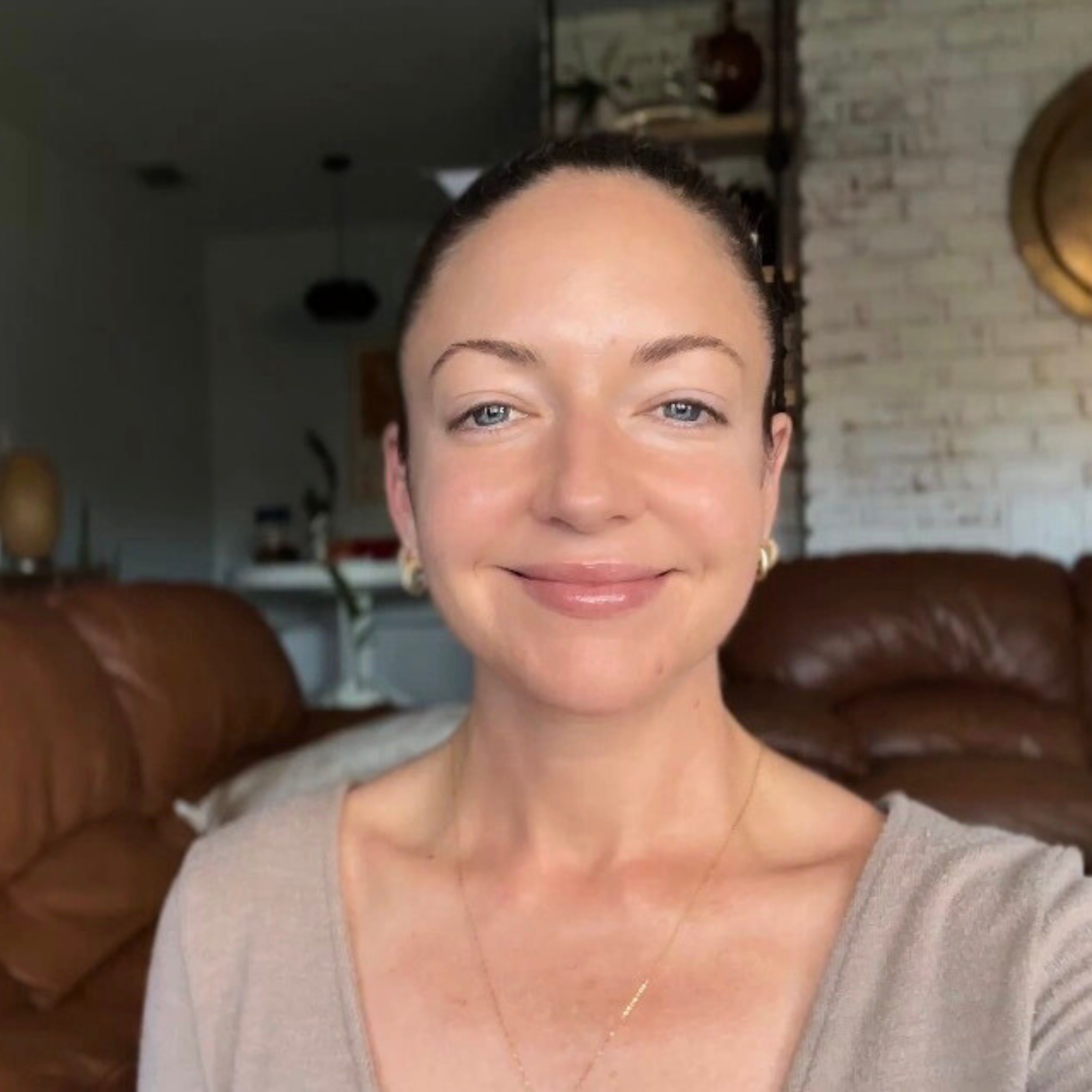
How suppression shows up in how we manage our appearance

Botox-less. Filter-less.
Suppression is the act of overriding our needs, feelings, and truth in order to stay safe, connected, or accepted. When suppression becomes a pattern, it turns into self-abandonment—a state of disconnection from who we really are.
Suppression doesn't only show up in our relationships. It shows up in how we manage our appearance, dimming our expression (botox) and overriding what is natural (fillers) in order to look acceptable. When we stop managing and start noticing, we often discover that what we thought we wanted was never actually ours to begin with.
How does suppression show up in appearance?
We manage how we look more than we realize. We smooth things out with botox. We correct with fillers. We adjust. We make choices about our face, our body, our presentation based on what we think we're supposed to look like rather than what actually feels true.
This can look like spending money on treatments we never questioned. Scheduling appointments around events so we look our best when it matters. Choosing how we present ourselves based on external expectations rather than internal preference.
None of this is inherently wrong. The question is whether we've ever actually asked ourselves: do I want this, or do I think I need this?
For many of us, the answer is that we never asked. The choice was made automatically, driven by habit, fear of aging, or the desire to be seen as beautiful by societal expectations. That automatic quality is what makes it suppressive. We override our own truth without even noticing we're doing it.
What happens when we're forced to stop?
Sometimes circumstances force the question. A budget change. A life transition. A season where the thing we always did becomes unavailable.
When we stop managing our appearance out of necessity rather than choice, something interesting happens. We get to see ourselves without the override. We get to notice what we actually look like, how we actually feel, and whether the thing we were doing was serving us or just soothing a fear.
The first reaction is often discomfort. We notice things we've been covering up. Lines, texture, asymmetry. Things that were always there underneath the management. The instinct is to fix it immediately. To get back to the version we're used to seeing.
Then, with time, something shifts. The discomfort fades. We start adjusting to what's actually there. We discover that the thing we were afraid of seeing is less alarming than we expected. We start to notice other things too. We can express ourselves more fully. We can move our face. We can be more present in our own body because we're not constantly overriding it.
Why does this matter?
This matters because suppression hides in the ordinary. It hides in the recurring appointment we never questioned. A product we keep buying. A standard we hold ourselves to that we inherited from somewhere else.
Research on self-compassion shows that when we offer ourselves the same acceptance we'd offer someone we care about, our nervous system responds as if we've received that acceptance from another person. The same principle applies here. When we stop overriding our natural appearance and allow ourselves to exist as we are, something settles. We feel more at home in ourselves.
This is connected to self-loyalty. When we are loyal to ourselves enough to stop managing how we look, we're practicing the same skill we need in every other area of life: choosing what's true over what's expected.
How do we know if we're overriding ourselves?
Here are some questions worth sitting with:
Am I doing this because I want to, or because I think I need to?
Have I ever paused long enough to ask?
If I stopped, what am I afraid would happen?
Is this choice coming from preference or from fear?
The goal here is not to stop taking care of ourselves. It's to make sure the care is actually ours. There's a difference between choosing something because it genuinely makes us feel good and choosing it because we're afraid of what happens if we don't.
Self-loyalty means choosing what's true for us, even when it looks different from what we've always done. Even when it means sitting with discomfort while we figure out what we actually want.
What does this look like in practice?
One person's version of this is Botox. Another person's version is straightening their hair every day. Another's is never leaving the house without makeup. Another's is buying clothes they can't afford to look a certain way at work.
The specifics don't matter. The pattern is the same: we override our natural state to meet an external standard we never chose. We do it so automatically that it doesn't feel like a choice anymore. It feels like maintenance.
When we slow down enough to notice, we give ourselves the chance to choose differently. Maybe we choose the same thing. Maybe we don't. The point is that the choice becomes conscious. And a conscious choice made from self-trust is a fundamentally different thing than an automatic behavior driven by fear.
That's what self-loyalty looks like in practice. We don't have to have the answer figured out. We just need to be willing to ask the question and trust ourselves to know the difference when it matters.
Frequently asked questions
Is caring about appearance the same as suppression? No. Caring about how we look is normal and healthy. Suppression happens when the care becomes automatic and unexamined, when we're making choices based on fear or external pressure rather than genuine preference. The difference is whether we've actually asked ourselves what we want versus doing what we think we're supposed to do.
How do I know if my beauty routine is suppressive? Ask yourself: if no one would ever see me, would I still do this? If the answer is yes, it's probably a genuine preference. If the answer is no or if you've never considered the question, it's worth exploring what's driving the choice. There's no right or wrong answer. The awareness itself is the practice.
Can I practice self-loyalty and still get cosmetic treatments? Absolutely. Self-loyalty is about conscious choice, not about rejecting specific behaviors. If we choose a treatment because we genuinely want it and it makes us feel good, that's self-loyalty in action. The shift is from "I need this to be acceptable" to "I want this because it's true for me." The behavior might look the same from the outside. The internal experience is completely different.