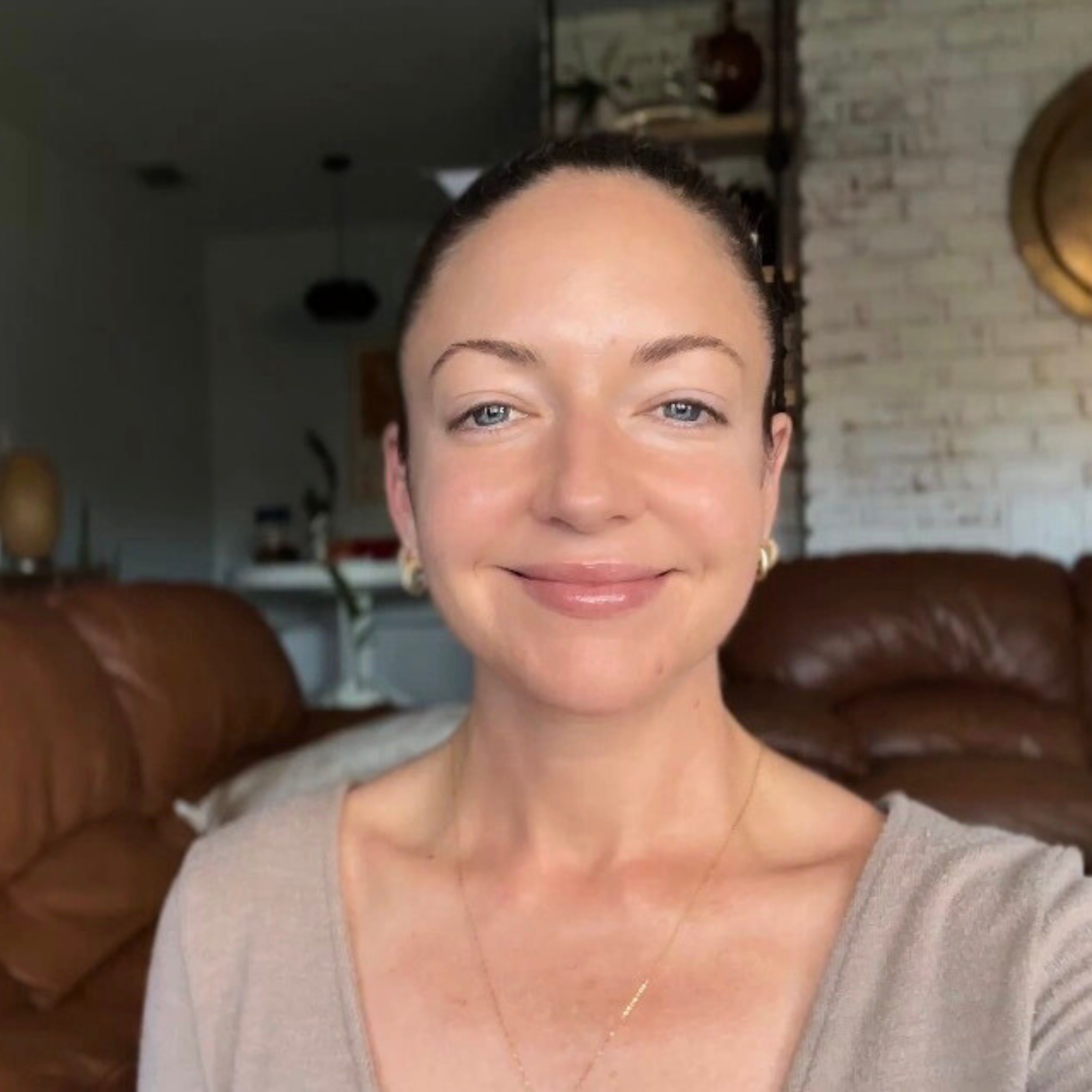
Why healing through the mind eventually hits a wall
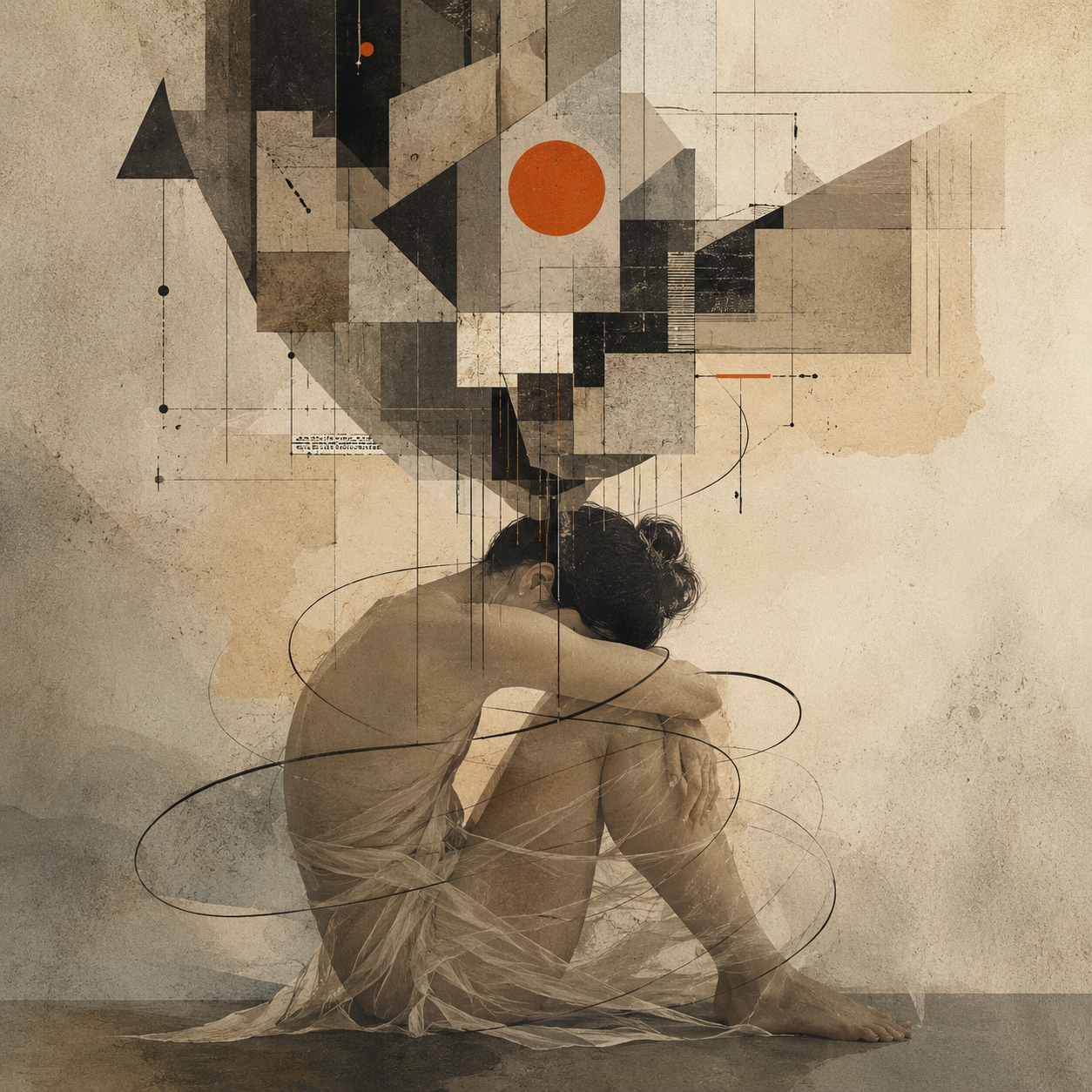
For people who suppress themselves, healing often stays stuck in the mind because understanding has become the primary tool of safety and control. Therapy, self-help, and processing all happen cognitively while the body continues to hold what the mind already moved past. Somatic work addresses the layer where thinking cannot reach—the nervous system itself, where survival responses are actually stored.
I've done the work. Years of therapy. Ayahuasca. Bufo. Holotropic breathwork. Deep, intensive, transformative work. I've processed. I've understood. I've traced patterns back to their origins. I know where things came from. I know why I do what I do.
All that and still my nervous system is bracing. Shoulders up. Hands tense. Stomach pulled in. Tongue pressed to the roof of my mouth. When I slow down enough to actually feel it, I notice all the ways my body is gripping.
This is what I'm working on right now. The gap between what I understand and what my body is still holding. The space between insight and embodiment. The wall that cognitive healing eventually hits. This is what's blocking me from evolving into my next best self. I am in my own way through the mind.
What the mind does well and where it stops working
Therapy helps us understand our patterns, trace them back, and build new ways of thinking. It gives us language for what happened. It helps us make sense of ourselves. That work matters.
For people who suppress themselves, understanding becomes everything. We learn early that our needs are inconvenient, our emotions are too much, our presence requires management. So we become the person who figures things out on our own. We process internally. We manage our emotions. We do the work without needing hand-holding.
We develop what I call a "good person" ego. An identity built around being the one who understands, processes, manages, and does the work. It's self-reliance turned into identity. And the mind becomes the mechanism through which that ego maintains control.
Think about all the healing we've done. Therapy. Self-help books and articles. Journaling. Processing with friends. Almost all of it happens in the mind. We think our way through it. We analyze. We understand. We figure it out. The body is barely involved yet that’s where the deeper work lives.
Why the body holds what the mind already processed
Most therapy works from the top down. We talk through what happened, reframe our thoughts, build new understanding. That works for a lot of things. But it has limits with trauma because survival responses don't live in the thinking part of the brain. They live in the body and nervous system. Those parts don't respond to reasoning.
When something overwhelming happens, the body activates fight, flight, or freeze. If that response cycle doesn't complete, the body holds onto the energy and that's where the experience gets stored.
In animals, this cycle finishes naturally. Dr. Peter Levine, the psychologist who developed Somatic Experiencing, observed that wild animals shake, tremble, and physically discharge the activation after a threat passes. Then they return to normal. The cycle completes through the shaking. The energy gets released through the body.
In humans, that discharge rarely happens. We override it or keep it together or compose ourselves. We think our way through it and move on. Somatic Experiencing helps the body complete the stress response that got interrupted and release the energy that's been stuck there ever since.
This is why understanding something doesn't release it. The mind may have processed it, but the body hasn't.
I understand intellectually where my bracing comes from. I can trace it back to the moment I learned to push down my truth, to stay quiet, to manage myself so I wouldn't be too much. I've processed that in therapy. I've cried about it. I've talked it through. Yet my shoulders are still tense every second of the day. That's the nervous system still holding onto what the mind has moved past.
Why we stay in the mind even when we know the body is involved
Habit. If thinking has been our primary tool for survival our entire lives, it's incredibly hard to step out of that. We're not taught how to live from the body. We're not taught how to trust what we feel without needing to understand it first. We're taught to think, analyze, figure things out.
The "good person" ego loves cognitive healing because it gets to stay in control. It gets to be the one doing the work. It gets to understand, process, manage.
At some point, this becomes a trap. The body is ready to release, and the mind won't let it. The ego says "Not yet. We have to understand it first.” And the body keeps waiting.
The difference between processing and releasing
Processing happens in the mind. Releasing happens in the body. That's the fundamental difference.
I know what both feel like.
In my medicine work (ayahuasca and bufo) I experienced true somatic release. I surrendered. I let go. I didn't have to understand it. I screamed. I roared. I purged. And on the other side of that surrender was so much beauty I can't even describe it. Everything unfolded. I didn't have to do anything. I could just be.
In holotropic breathwork, I experienced that same surrender through the body. I wailed without knowing why. My body moved in ways I wasn't directing. The release happened through sound, through movement, through breath. No understanding required. Just trust. Just letting the body do what it needed to do. And on the other side, the same spaciousness. The same settling.
The major difference is that somatic release requires a whole new level of trust. Trust that the body knows what to do. Trust that I don't need to understand it first. Trust in the letting go and losing all control.
For people whose entire identity is built around being the person who figures things out, that is extremely difficult to do.
The work I'm sitting with now
I've been called to release the mind and instead, flow from emotion, body, spirit. This is what's required to truly let go of what I'm holding onto that no longer serves me and embody the new version of me that wants to emerge. I'm essentially trying to figure out how to live in less force and more flow.
In ceremony, I've experienced what it feels like to let the body lead. I've been on that other side. I know what flow feels like.
The question is: how do I access that without the medicine? How do I bring that into my everyday life? How do I live from that place of trust and letting go when my default is to grip, manage, and analyze?
Maybe it's a different layer. Maybe it needs consistent body-led work, not just peak experiences. Maybe the pattern doesn't fully eliminate. Maybe we just learn to notice it faster, release it sooner, return to ourselves more quickly.
I don't have the answer yet. I'm in the question. And trying to let go of needing the answer is part of the work. The old way was figure it out, understand it, control it. The new way is trust that life will show me. Without force. Just by being.
What I know for sure
Healing through the mind works until it doesn't. Understanding is essential. Therapy is valuable. Processing matters. At some point, the body needs its own process.
The nervous system holds what thinking cannot reach. Somatic work addresses the autonomic nervous system which plays a crucial role in the body's response to stress and trauma. Somatic work helps us release what’s been stored below the mental processing.
This is the evolution: From suppression (overriding ourselves to stay safe) to self-loyalty (honoring ourselves, choosing ourselves) to flow (trusting ourselves so deeply we stop needing to control).
I'm somewhere between self-loyalty and flow. Still learning. Still bracing. Still catching myself trying to understand my way out of the very pattern I'm writing about.
What I’ve created as I figure this out
As I've been working on letting go of the mind's grip, I started experimenting with what actually helps me access that state I found in ceremony—without needing the medicine to get me there.
What I've discovered is that Release & Claim is part of my answer. It's a 90-minute guided somatic experience I designed to help the body complete what the mind already processed. It's not therapy. It's not cognitive work. It's body-led from start to finish.
Through guided movement, we activate the body's natural discharge mechanism to release stored tension. Then sustained, intensive breathwork moves us into the emotional and physiological layers where the stored material actually lives. Then rest and integration, where the nervous system reorganizes around what just moved through it.
What this feels like from the inside is unlike anything the mind can prepare us for. It's being present moment by moment to what the body is doing, without directing it. It's a loss of control in the most needed way. The aftermath is what stays—a quality of spaciousness and settledness that thinking about letting go never produces. It's a way to feel into, maybe for the first time, what a somatic experience can do.
This is the work I'm doing alongside the people I guide through it. I'm not writing from the other side saying "here's how I did it." I'm writing from inside the question, discovering what helps, and sharing what I'm finding as I find it.
Frequently asked questions
Why doesn't therapy fully resolve what I'm holding? Therapy works through understanding and cognitive processing, which addresses patterns and builds new ways of thinking. What it doesn't always address is what the body is still holding from before that understanding arrived. The nervous system stores incomplete stress responses that don't respond to insight alone. Somatic work completes what the mind moved past.
What's the difference between processing something in therapy and releasing it somatically? Processing happens in the mind through talking, understanding, and making sense of what happened. Releasing happens in the body through movement, breath, and sensation without needing to understand why. Somatic release requires trust that the body knows what to do, which can feel unfamiliar for people who've relied on cognitive understanding for healing.
Can somatic work replace therapy? No. Somatic work and therapy address different layers. Therapy builds understanding, insight, and new cognitive patterns. Somatic work completes what the body is holding. They work best together. Release & Claim is designed to work alongside an existing therapeutic practice, not as a replacement for one.