The evolution beyond rigid self-protection
For years, self-loyalty meant prioritizing myself above all else. It was necessary. It was healing. It was the antidote to a lifetime of suppression. But something shifted recently—I found myself being called into a version of self-loyalty that includes others without abandoning myself. This is the evolution from rigid self-protection to compassionate self-loyalty, and it's asking me to trust in an entirely new way. In this article, we explore what that shift looks like, why it happens, and what science says about why we are wired for it.
For years, choosing myself was the work. After a lifetime of suppressing my truth to stay safe, connected, and accepted, self-loyalty was the antidote. It meant prioritizing myself. Honoring my needs. Doing what was best for me, even when it was uncomfortable or inconvenient for others.
In my 20s, I lived for external validation. I shaped myself around what others needed, what they approved of, what kept me safe in their eyes. I suppressed myself so consistently that it became invisible—just the way I moved through the world.
Then my 30s came and everything reversed. The disconnection I felt from myself after years of living for others' approval led me inward. I embarked on a decade of deep inner work—therapy, self-discovery, learning to know myself again. I became a digital nomad. I traveled on my own timeline, in my own way. I stopped letting others dictate how I lived. I built a life around radical self-prioritization. If it didn't serve me, I didn't do it. My logic was simple: a full cup serves others better than an empty one. Prioritizing myself was the foundation for having anything real to give.
That phase was necessary. It was healing. It was the only way to counteract decades of abandoning myself. What I couldn't see until recently was how rigid it had become.
What rigid self-protection actually looks like
Rigid self-protection is self-loyalty without flexibility. It's "me first" as a rule. It's a protective shell that keeps you safe but also keeps others at a certain distance.
I didn't see it as rigid throughout my 30s. It felt like strength. Like finally knowing what I wanted and not apologizing for it.
But recently, life showed me a different picture.
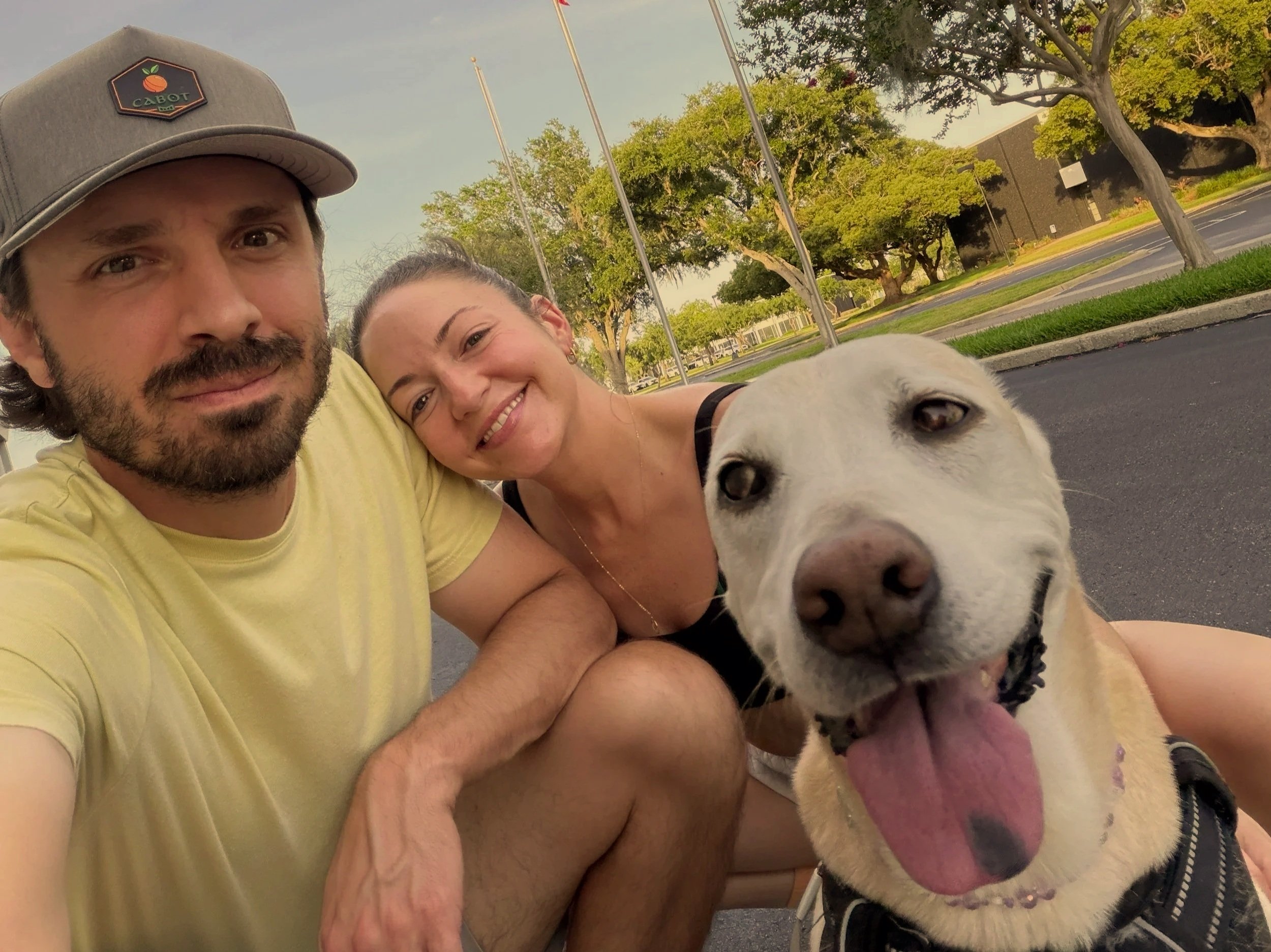
My fiancé and I were facing a housing situation. Our lease was ending and we had a roommate—something I never wanted in the first place (I've always preferred my own space). The new place we wanted wasn't ready for another two months. I had two clear options: move to my parents' house temporarily (what's best for me—saving money, getting out of a living situation I never wanted) or stay in the house together and wait it out (what's best for us—staying connected, being with him and our dog).
The old me would have known immediately what to do. Choose myself. Move back to my parents' house. Hold my boundaries. That's what self-loyalty taught me.
But this time, I sat in the middle of the decision and didn't feel clear. The more I tried to think my way through it, the more unclear I became.
It wasn't until a few hours passed and I stepped away from it entirely that something shifted. The answer came quietly, without force. For the first time in a very long time, I genuinely upheld what was best for us. I wanted to stay. I wanted what was best for both of us.
That was new for me. And I loved it.
Why the shift felt safe instead of scary
When I first noticed this pull toward considering others, I expected resistance. I expected the old fear to show up: is this just people-pleasing again? Am I going back to abandoning myself? But it didn't feel like that. It felt grounded. Clear. True. My shoulders were a little more relaxed. My body was slower moving. There was an ease to the decision that rigid self-protection never produced.
That's how I knew it was different. With rigid self-protection, choosing myself always felt slightly tense—like I was defending something. Like I had to hold the line.
With compassionate self-loyalty, considering others felt like expanding rather than shrinking. Like there was enough room for both of us without me disappearing.
That distinction matters. Science backs it up.
What the research says about this shift
Dr. Kristin Neff, the leading researcher on self-compassion, has spent decades studying what happens when we learn to be kind to ourselves. Her research shows that self-compassion has three core components: self-kindness, common humanity, and mindfulness.
The "common humanity" piece is the one that applies here. Self-compassion means seeing one's experiences as part of the larger human experience rather than as separating and isolating. When we heal enough to stop seeing ourselves as separate—when we stop needing to protect ourselves from the world—we naturally start to feel our connection to others again.
What's also interesting is what Neff's research shows about the relationship between self-compassion and compassion for others. Most people are extraordinarily skilled at offering kindness to others during times of difficulty—a friend who fails, a colleague who struggles, a family member who suffers. Yet when the same difficulties arrive in our own lives, a very different inner voice tends to emerge: harsh, critical, and unrelenting.
For those of us who suppressed ourselves, that equation gets reversed. We learned to extend kindness outward (to keep the peace, to stay safe) while being harsh with ourselves on the inside. Building self-loyalty corrects that. We learn to extend kindness inward. And once we've built enough of that inner resource, we find we can offer it outward again. This time from a grounded place, not a depleted one.
The nervous system piece
There's also something happening in the body when we make this shift.
Our nervous systems are not designed to self-soothe in isolation. From infancy through adulthood, we depend on safe, attuned relationships to help us regulate our emotions. This is called co-regulation—the way our nervous systems influence each other when we're in connection with people we trust.
Co-regulation is the way that the nervous system of one individual influences the nervous system of another. When you yawn, I yawn too. If you laugh, I feel happy. When you cry, I am moved. If I am calm, you are soothed.
For people who've spent years in suppression and then years in rigid self-protection, connection can feel threatening. The nervous system learned early that others were unsafe, that proximity meant losing yourself, that closeness required self-abandonment.
So we pulled back. We protected ourselves by becoming self-sufficient. By not needing anyone. By choosing ourselves first, every time.
But our bodies are wired for connection. The presence of a trusted other signals safety, allowing the parasympathetic nervous system to engage, promoting rest and repair.
When I chose to stay with my fiancé instead of retreating to what was safer for me alone, my body felt it. The ease. The slower pace. The clarity. That was my nervous system finally feeling safe enough to let someone else in.
The difference between going back and moving forward
This is the question that matters most:
How do you know if considering others is compassionate self-loyalty or if it's regression—going back to self-abandonment, back to people-pleasing, back to suppressing yourself to keep the peace?
The answer is in the body.
Self-abandonment feels tight. Anxious. Like you're overriding something true. The "yes" comes from fear. From the need to keep someone happy. From the worry about what happens if you say no.
Compassionate self-loyalty feels grounded. Clear. True. The "yes" comes from choice. From genuine care. From a place where there's enough of you left over to give without losing yourself.
The difference is whether you're shrinking or expanding.
When I chose to stay, I wasn't shrinking. I wasn't disappearing into what he needed. I was expanding into what we needed. And I could feel the difference in my body.
That's the discernment that self-loyalty builds. Years of choosing yourself, honoring your truth, listening to your body—that practice creates the internal clarity to know when you're giving from fullness and when you're giving from depletion.
You can't skip to compassionate self-loyalty. You have to build the foundation first.
What this evolution actually means
This isn't a rejection of self-loyalty. It's an expansion of it.
Self-loyalty taught me how to hear my own truth. How to trust my body. How to stop overriding myself to meet external standards.
Compassionate self-loyalty takes that foundation and extends it outward. Instead of always asking "what's best for me?", I'm learning to ask "what's best for us?" And I can do that now because I'm not afraid of disappearing anymore.
I know who I am. I know what I need. I know how to come back to myself if I've drifted. That security makes it safe to consider others. To give without losing myself in the giving.
The evolution isn't from self-loyalty to self-sacrifice. It's from rigid self-protection to grounded, gracious, compassionate self-loyalty. And my body tells me when I'm in it. The shoulders relaxing. The slower pace. The sense of expansion rather than contraction.
Frequently asked questions
How do I know if I'm ready to move from self-loyalty into compassionate self-loyalty? The readiness shows up in the body. When choosing yourself feels defensive (like you're holding a line) that's rigid self-protection. When choosing yourself feels grounded and you find you have room to consider others without anxiety, that's the beginning of the shift. You can't rush it. Compassionate self-loyalty requires a foundation of real self-trust. If you're still in the early stages of building self-loyalty, stay there. The expansion will come when you're ready.
What's the difference between compassionate self-loyalty and people-pleasing? People-pleasing comes from fear. You give to others because you're afraid of what happens if you don't—afraid of conflict, rejection, or disapproval. Compassionate self-loyalty comes from choice. You give to others because you genuinely want to, because you're grounded enough in yourself to extend care outward without losing yourself in the process. The difference is in the body. People-pleasing feels tight and anxious. Compassionate self-loyalty feels grounded and clear.
Can you be self-loyal and still prioritize others sometimes? Yes. Self-loyalty is about staying connected to your truth and making decisions from your own knowing. Compassionate self-loyalty is the evolution of that—learning to hold space for your truth and the needs of others at the same time. When you're grounded enough in yourself, there's room for both. The practice is learning to feel the difference between giving from fullness and giving from depletion.